

Process
How it’s made
Every pair moves through the same five stages on its way from raw wood to finished frame. Nothing is automated — each step is done by hand, one temple at a time.
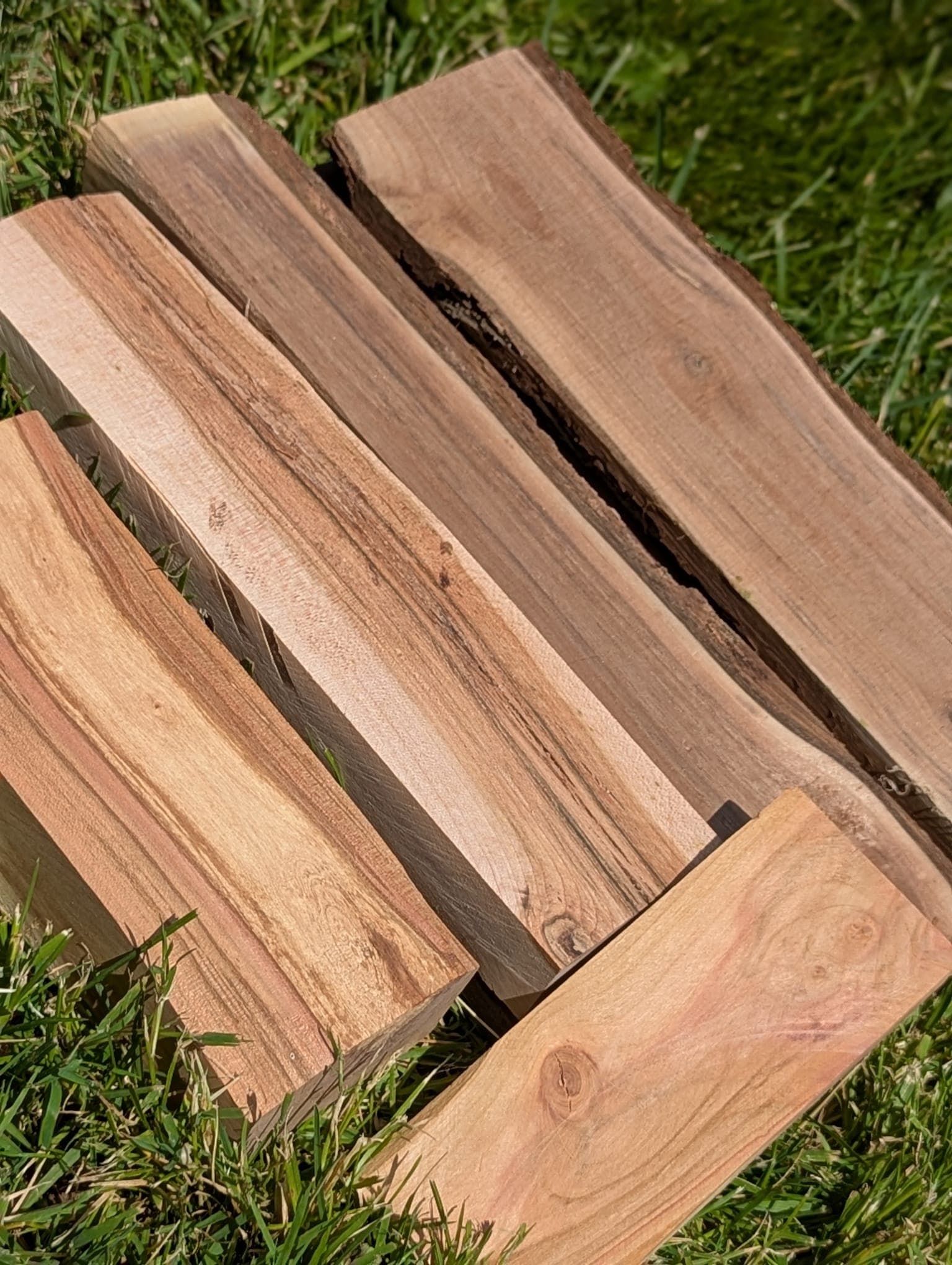
1. Choosing the wood
Every piece starts with a select piece of timber, hand picked for its grain, color, and how it will pair with a frame front. No two blanks are identical, so no two finished temples are either.
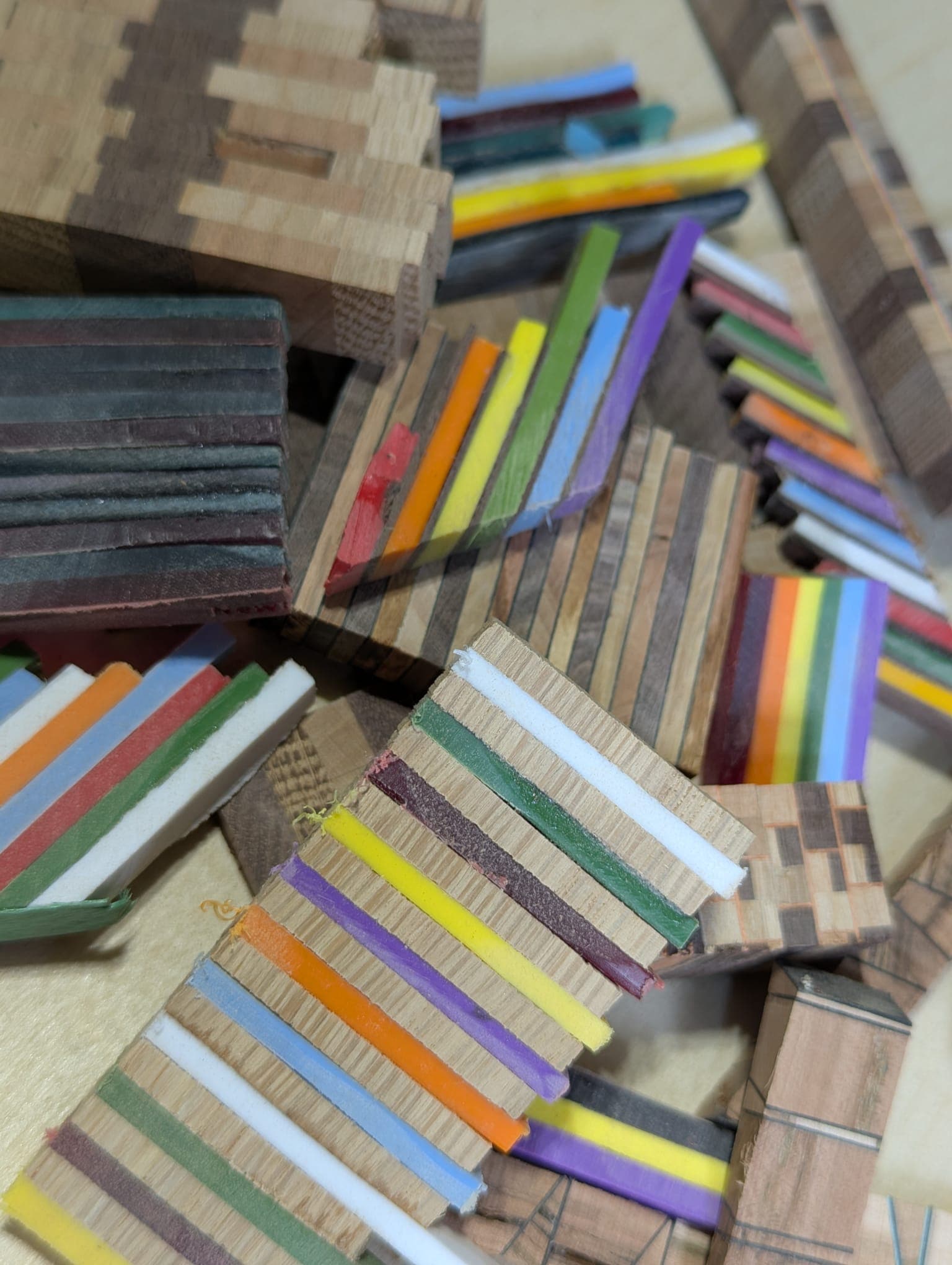
2. Designing the inlay
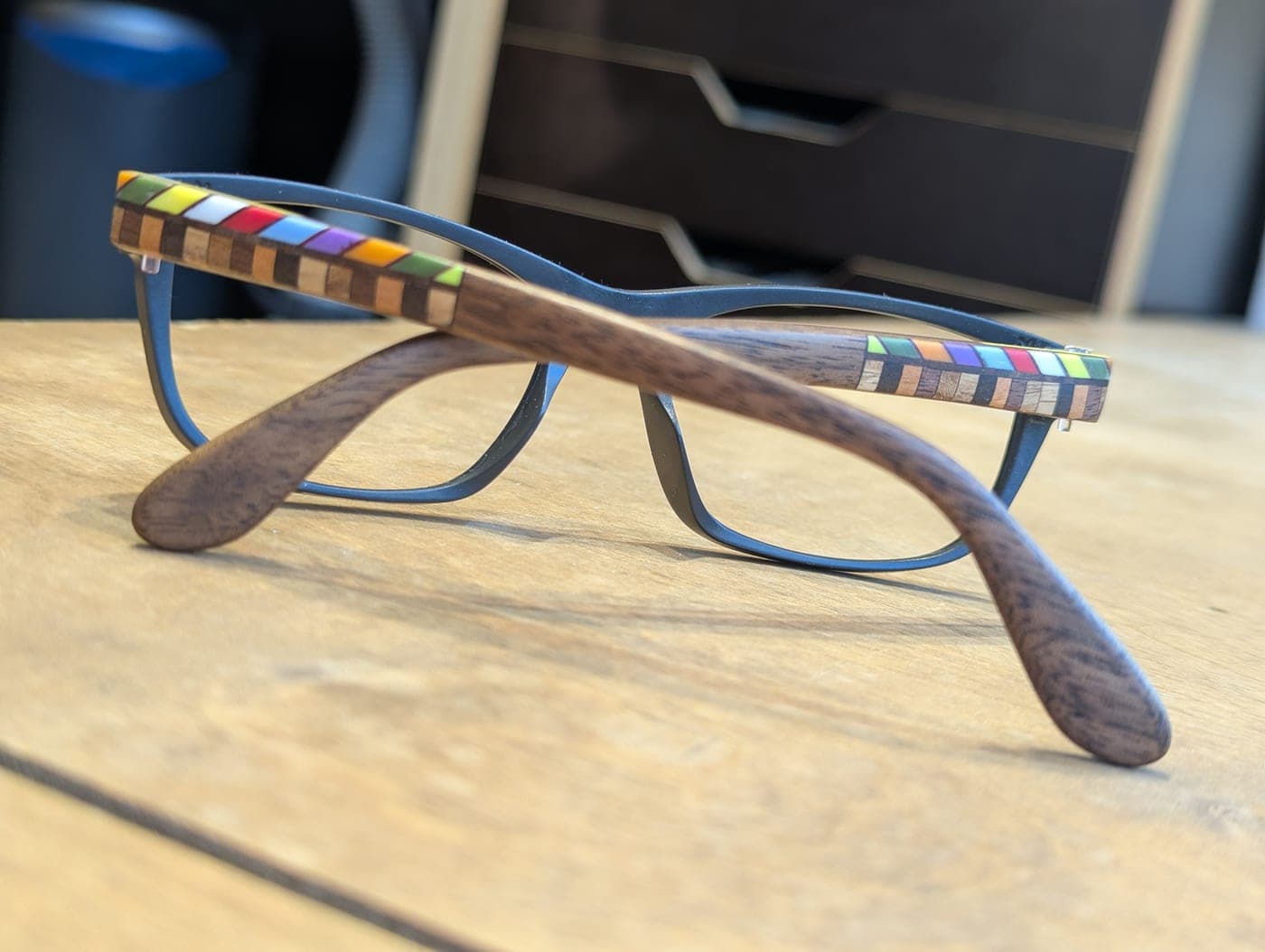
For pieces with a stripe, or mosaic accent, the inlay is laid out first. Thin strips of leftover wood and plastic frame parts are arranged into chevrons, checkerboards, or rainbow bands before they're set permanently into the temple.
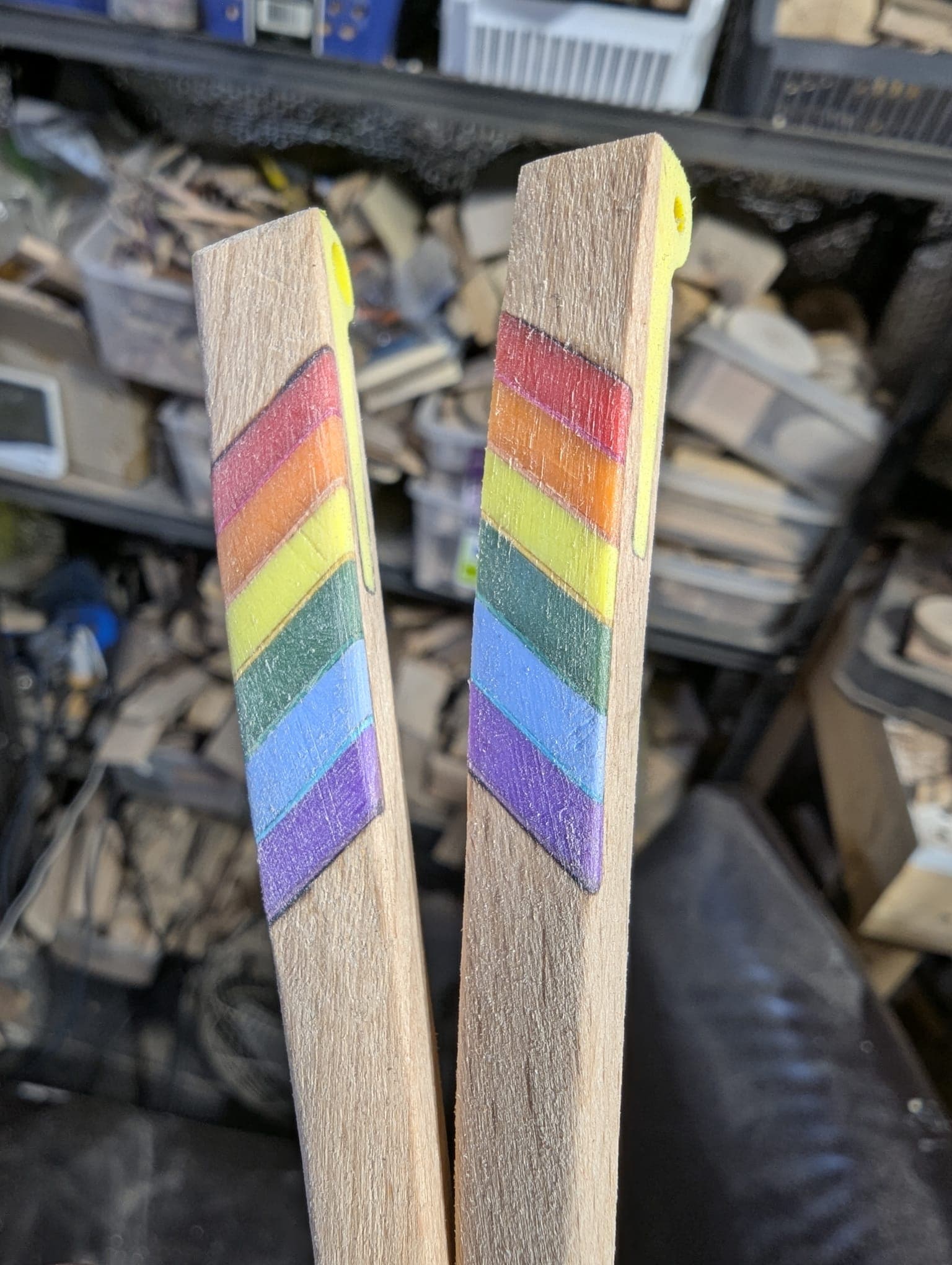
3. Hand-setting the details
Each inlay is cut, glued, and sanded flush by hand—a slow process where a fraction of a millimeter can mean the difference between a seamless finish and one that feels just slightly off.
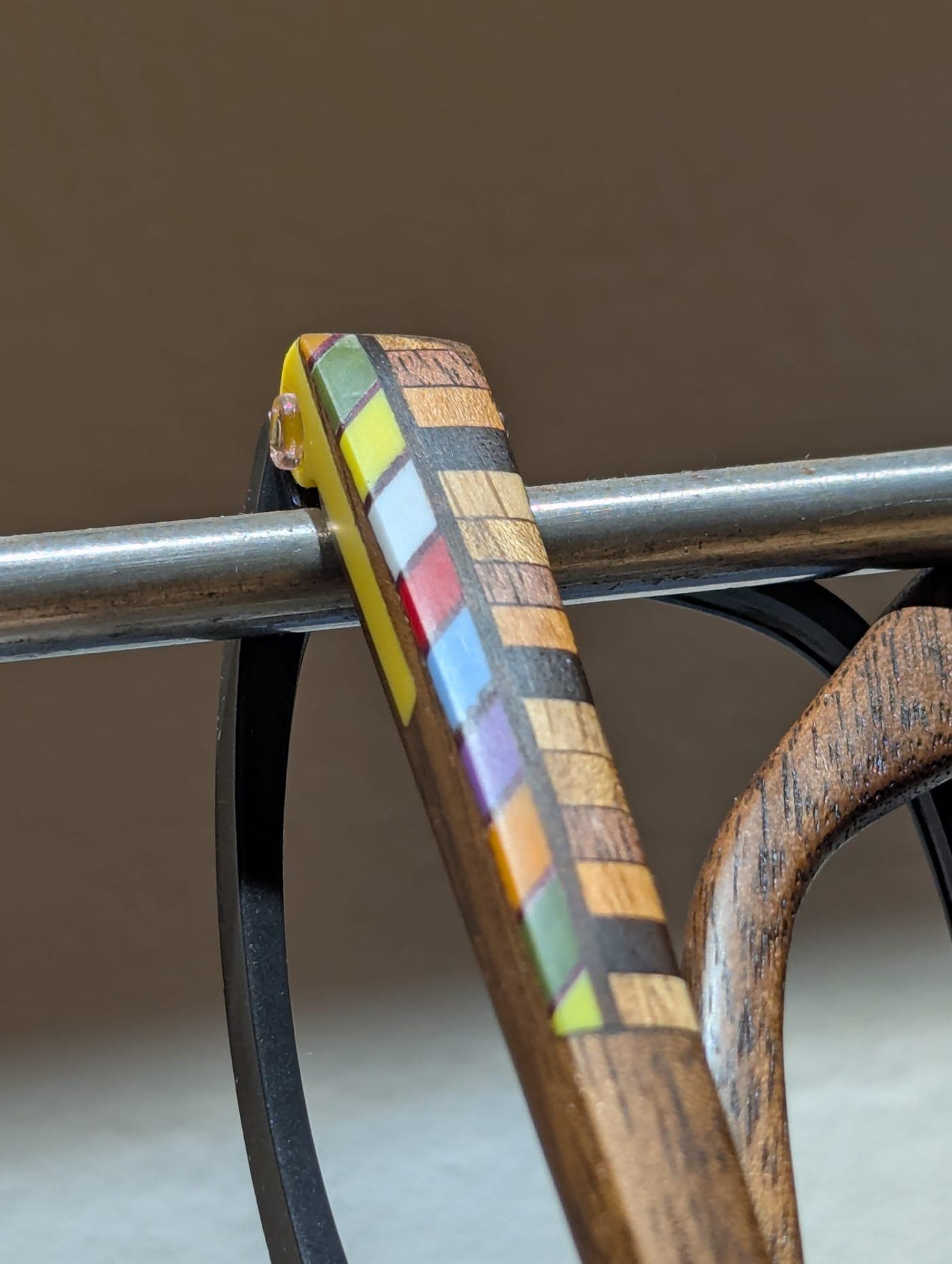
4. Shaping & finishing
Once the inlay is set, each temple is shaped to its final curve, sanded through progressively finer grits, and finished with oil to bring out the grain and protect the wood for everyday wear.
5. Fitting to the frame
The finished wood temples are hinged onto a frame front and carefully adjusted for fit. I balance the weight, set the splay angle and pantoscopic tilt, and make sure the grain of the wood complements the color and character of the front. The result is something that sits comfortably on the face while still feeling like a handmade object—part craftsmanship, part eyewear.