

About
It started with a plank for grilling fish
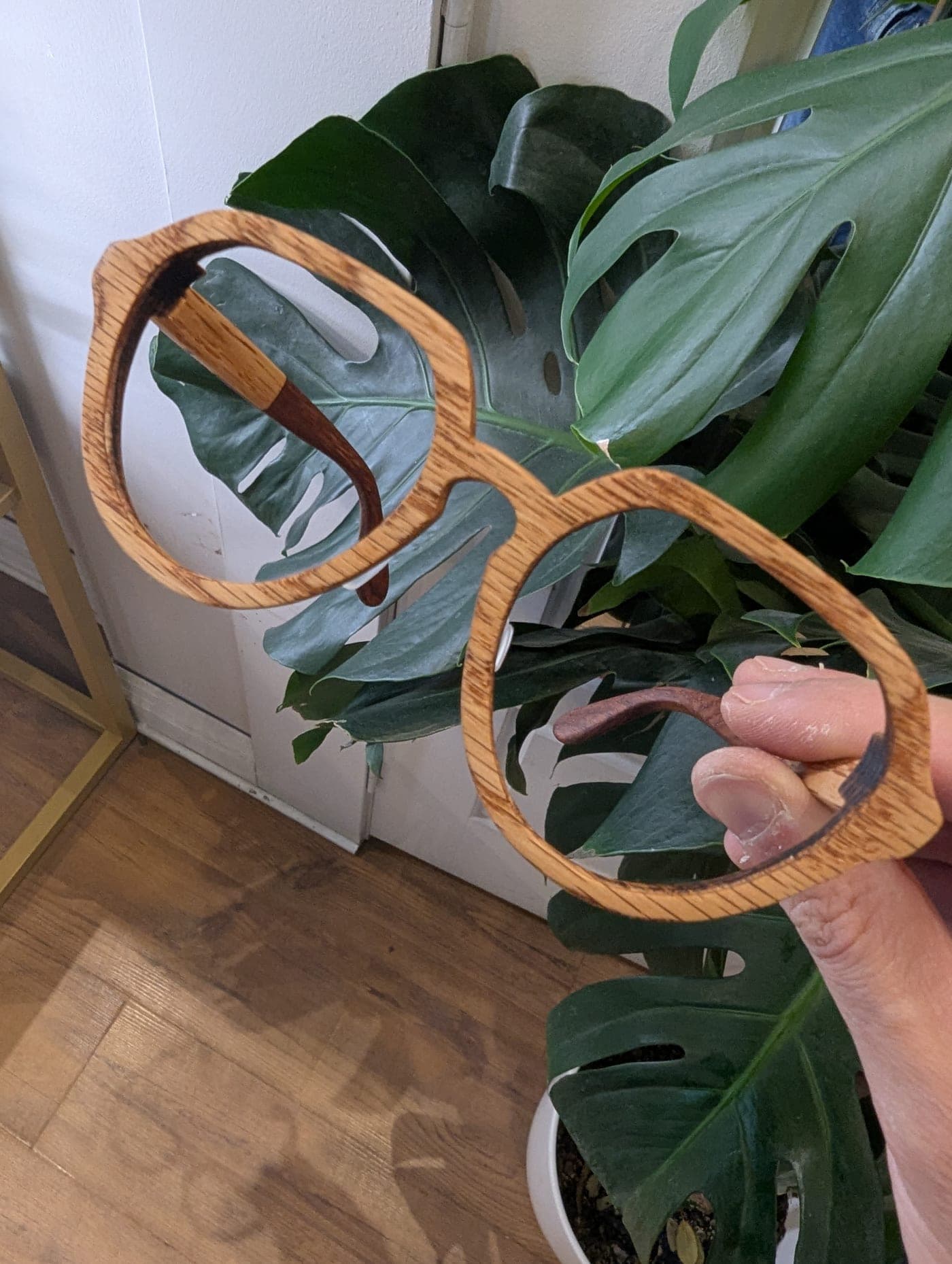
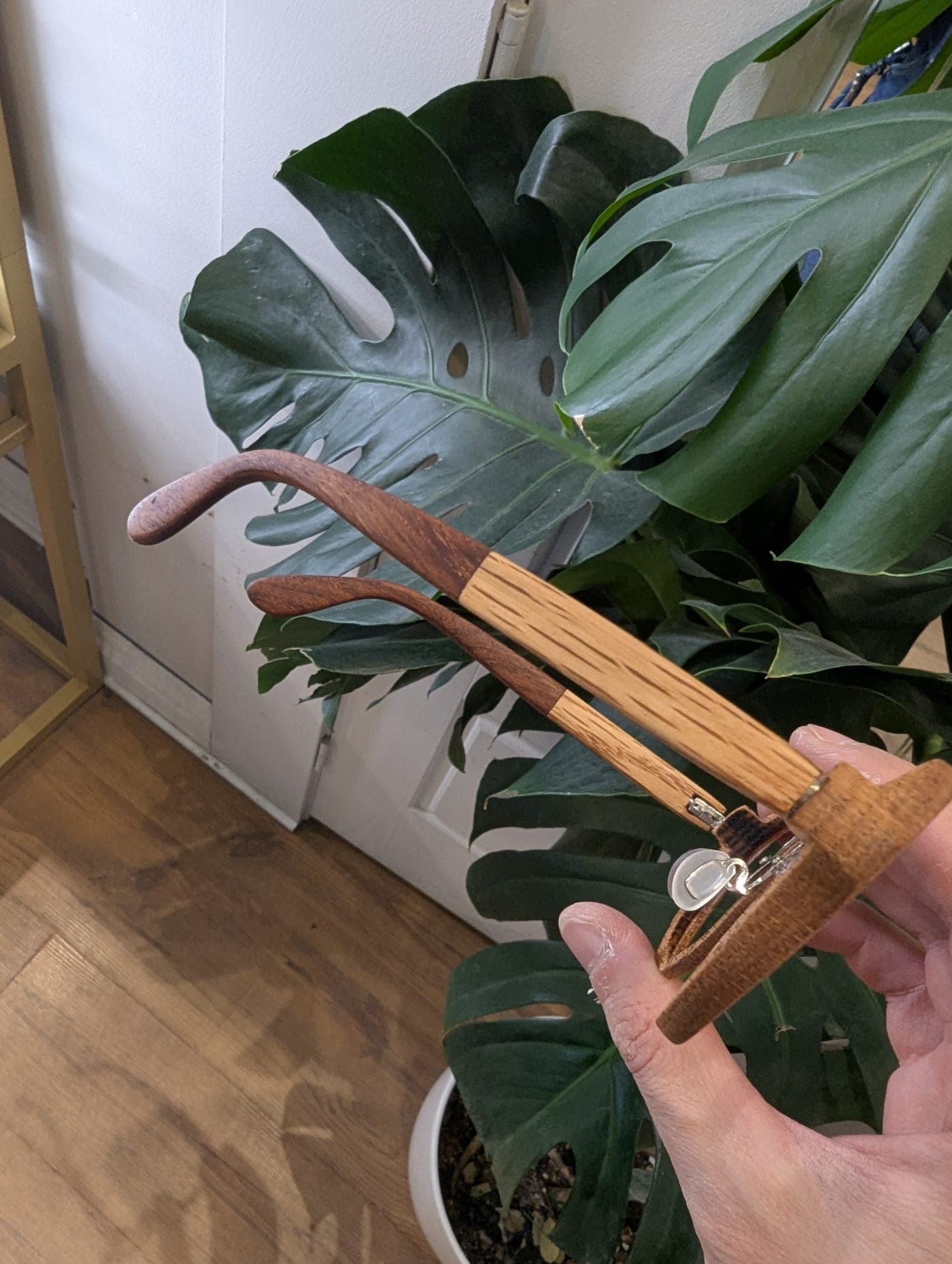
I’m an optometrist by training. Early in my career, I worked for Dresden Vision, an optical company built around a simple modular idea: every frame front and temple is held together by a single pin, making every part fully interchangeable. Spending my days around frames that came apart so easily got me thinking: what if the temples were made of wood?
My first attempt was carved from a scrap of cedar — the kind of plank you’d use to grill a fish, not build a pair of glasses. The curves weren’t quite right, and the fit was far from perfect, but it held together. More importantly, it did the one thing that mattered: it held a pair of lenses in front of my eyes.
From there, I focused on improving one detail at a time — the fit, the shape, the finish. I started collecting woodworking tools and setting up a small workshop in the basement of one of my clinics. Before long, that corner became the place where I spent most of my free time.
The more time I spent shaping wood, the more I wanted to keep doing it. Eventually, the workshop moved home, the tools multiplied, and what began as a curiosity turned into something I could share with other people.
Thank you for supporting handmade work. I hope these frames serve you well for years to come and become a small part of your own story along the way.
Jason Woo

Why wood + glasses
Two materials that were never supposed to meet
Wood and TR-90 nylon each bring something different to a frame.
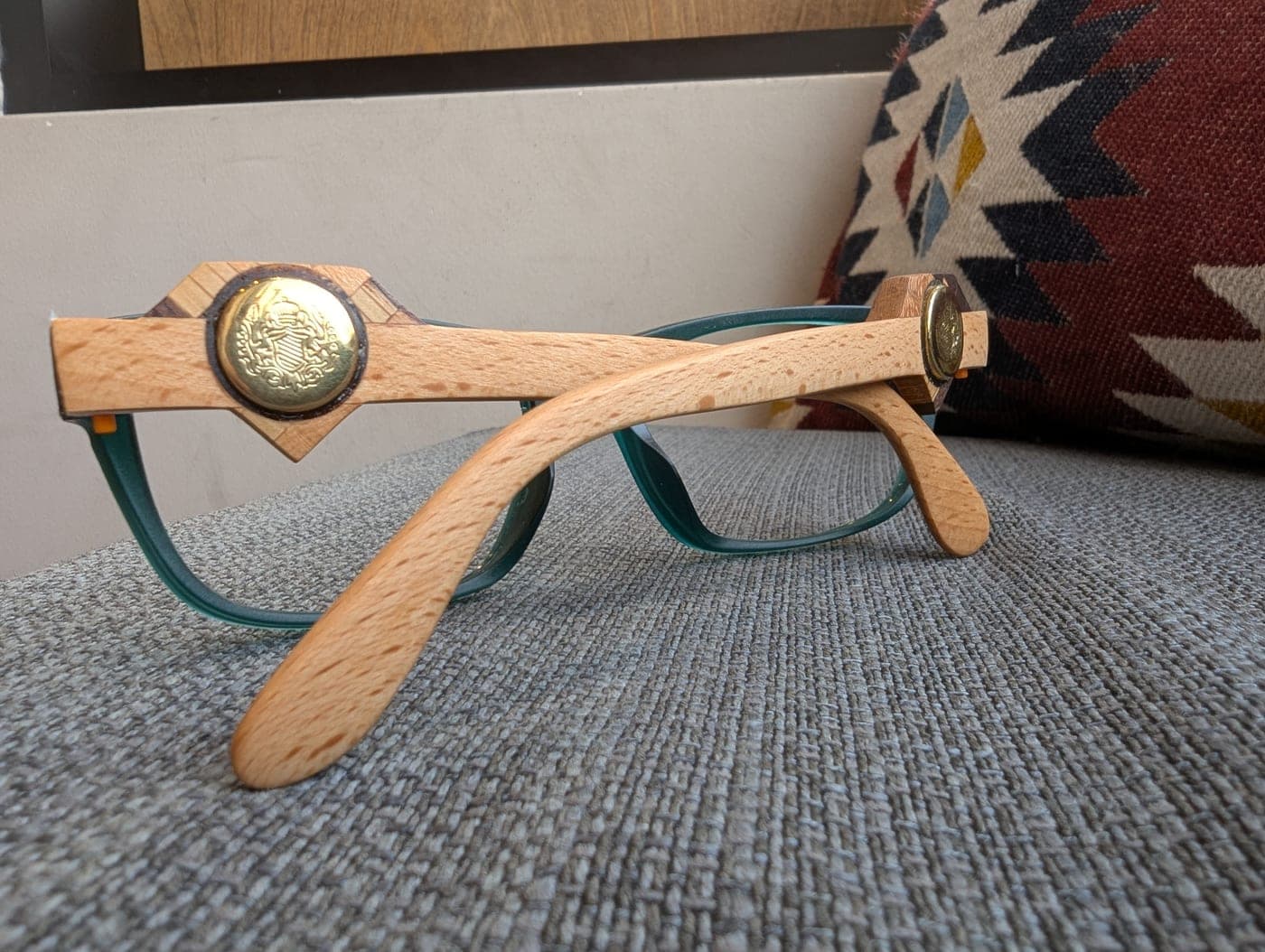
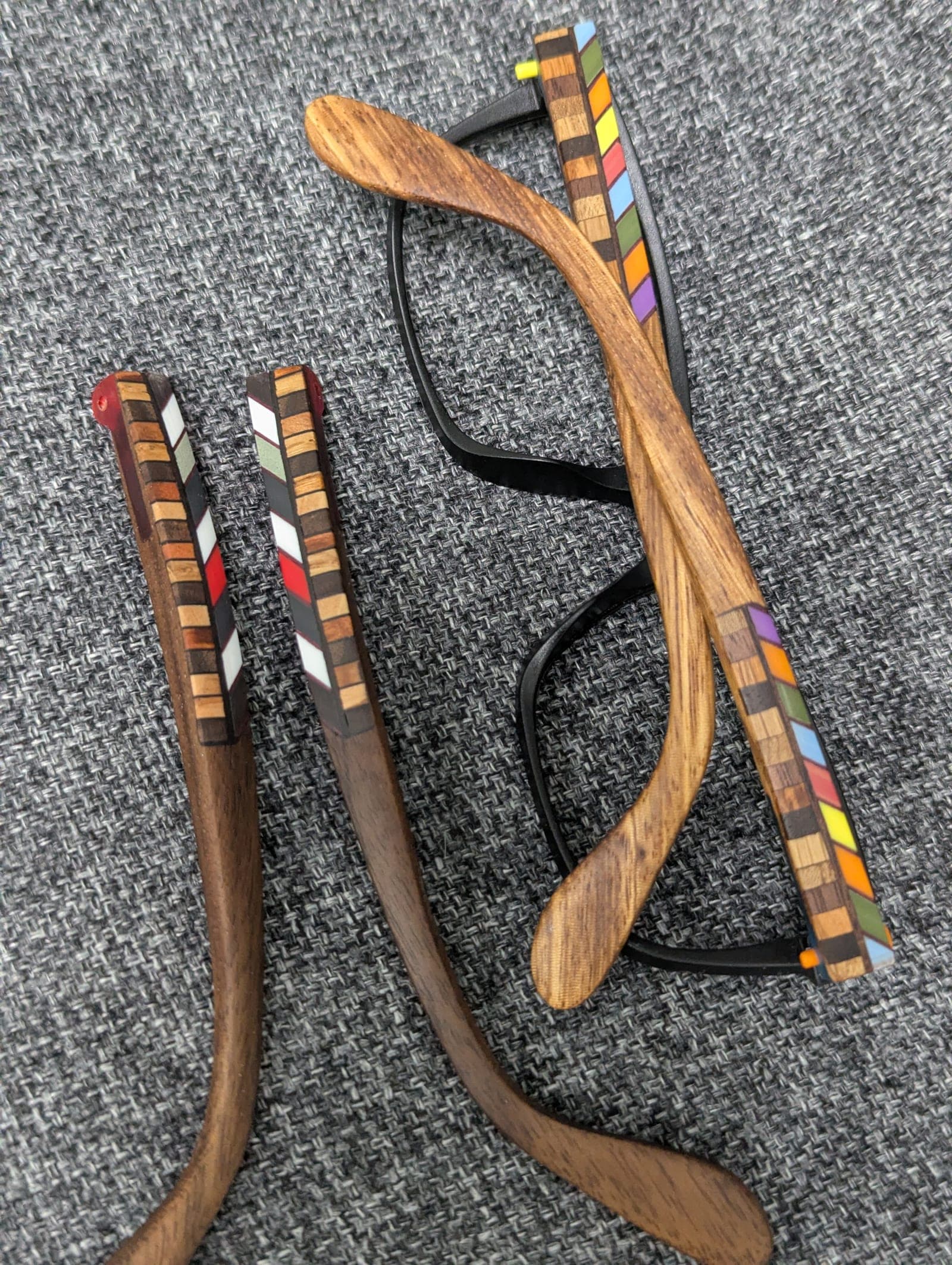
The recycled TR-90 nylon front provides the shape, color, durability, and everyday practicality that make for a great pair of glasses. Wood brings something else entirely. No two pieces have exactly the same grain, it feels warm against the skin, and it develops character over time as it’s worn and handled.
When combined, they create frames that are genuinely one of a kind. Even if I start with the same frame front and the same species of wood, no two finished pairs will ever be exactly alike. They’ll share the same foundation, but each pair ends up with its own unique character.
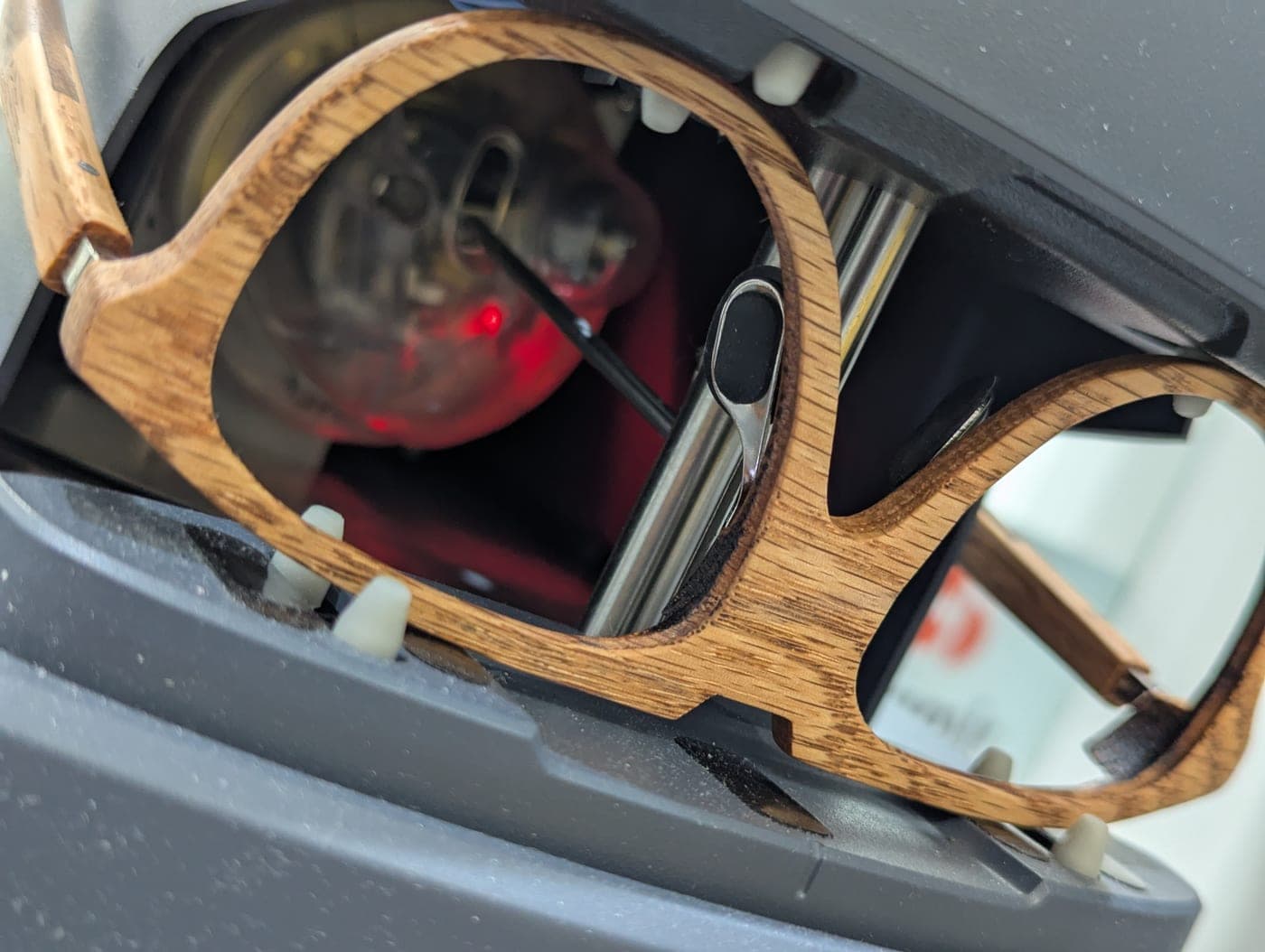
Every wooden temple is cut, shaped, inlaid, sanded, and finished by hand before being fitted to a recycled frame front. I personally adjust and inspect every pair, checking the fit, balance, splay angle, and pantoscopic tilt to make sure they sit comfortably and naturally on the face. No matter how beautiful a frame looks on the workbench, it isn’t finished until it feels right when you put it on.
In the workshop
A closer look